

 Image 1 of 14
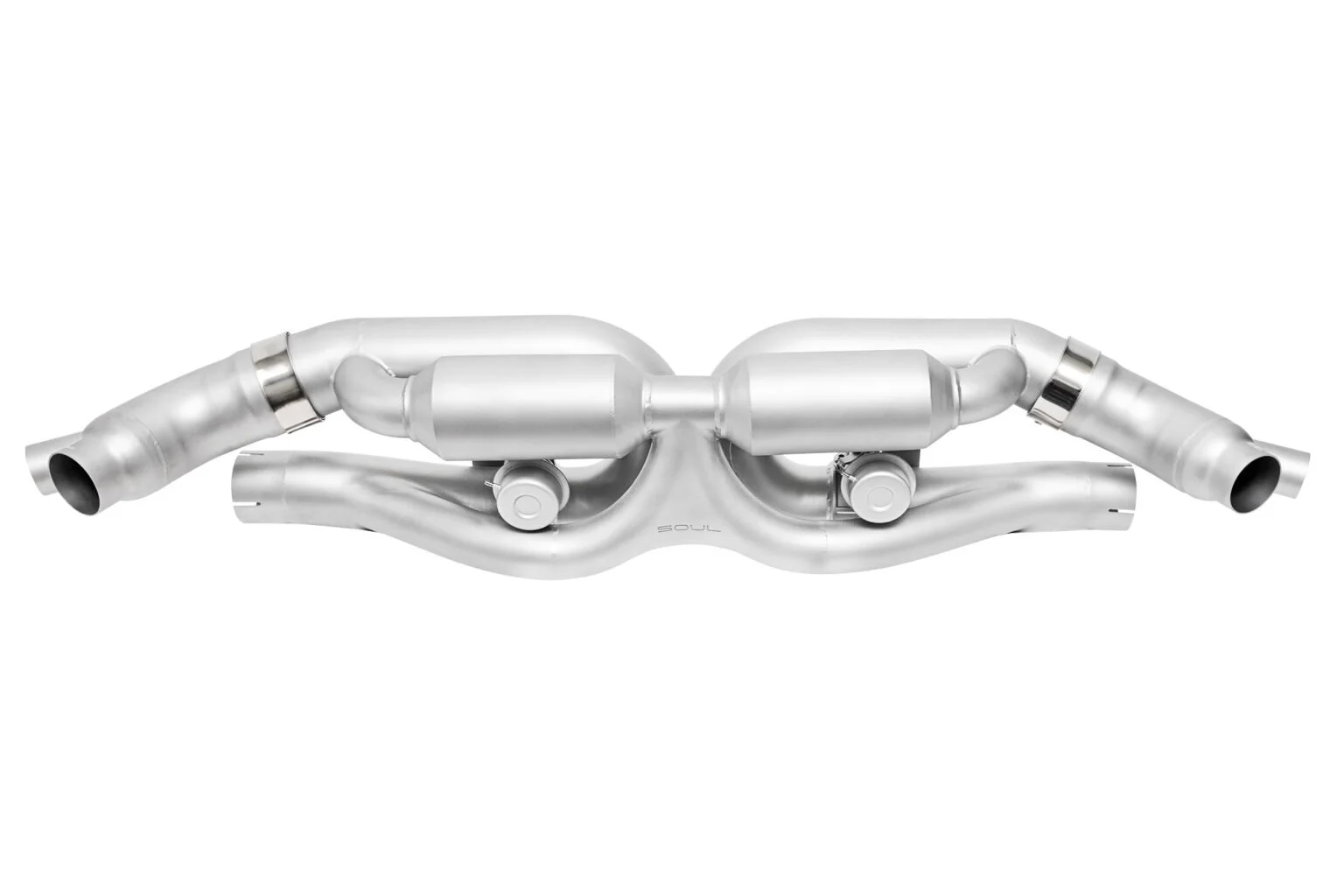 Image 2 of 14
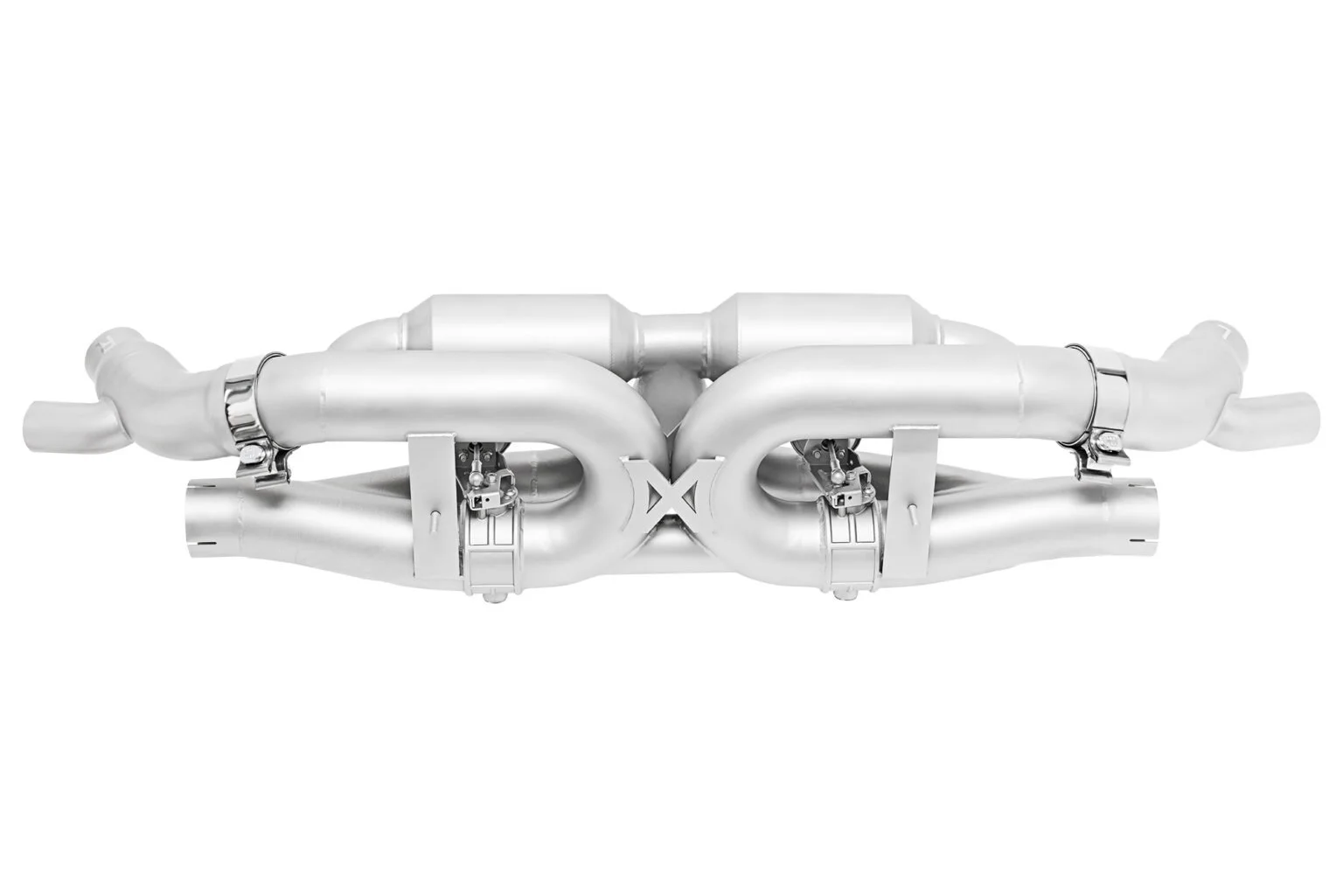 Image 3 of 14
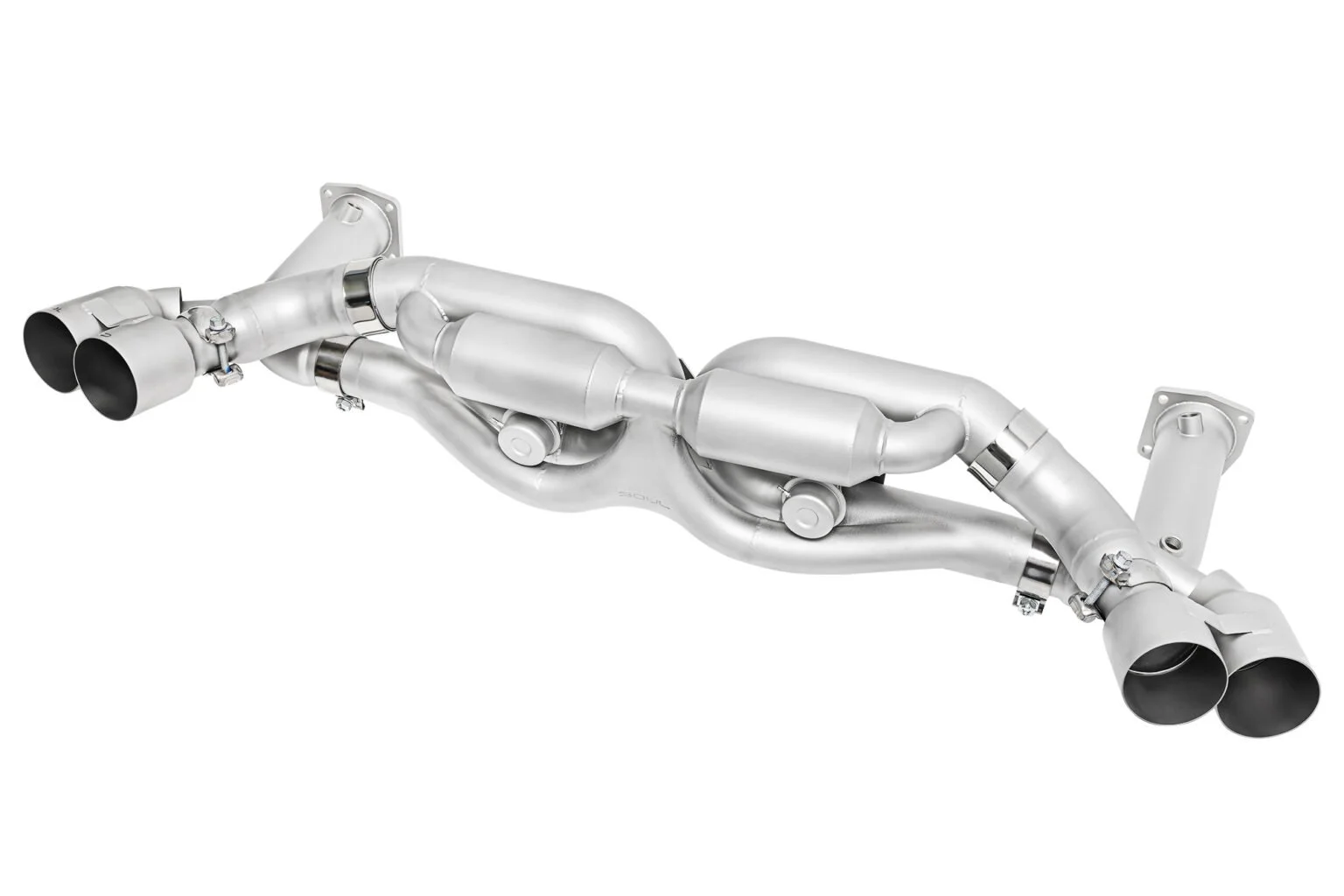 Image 4 of 14
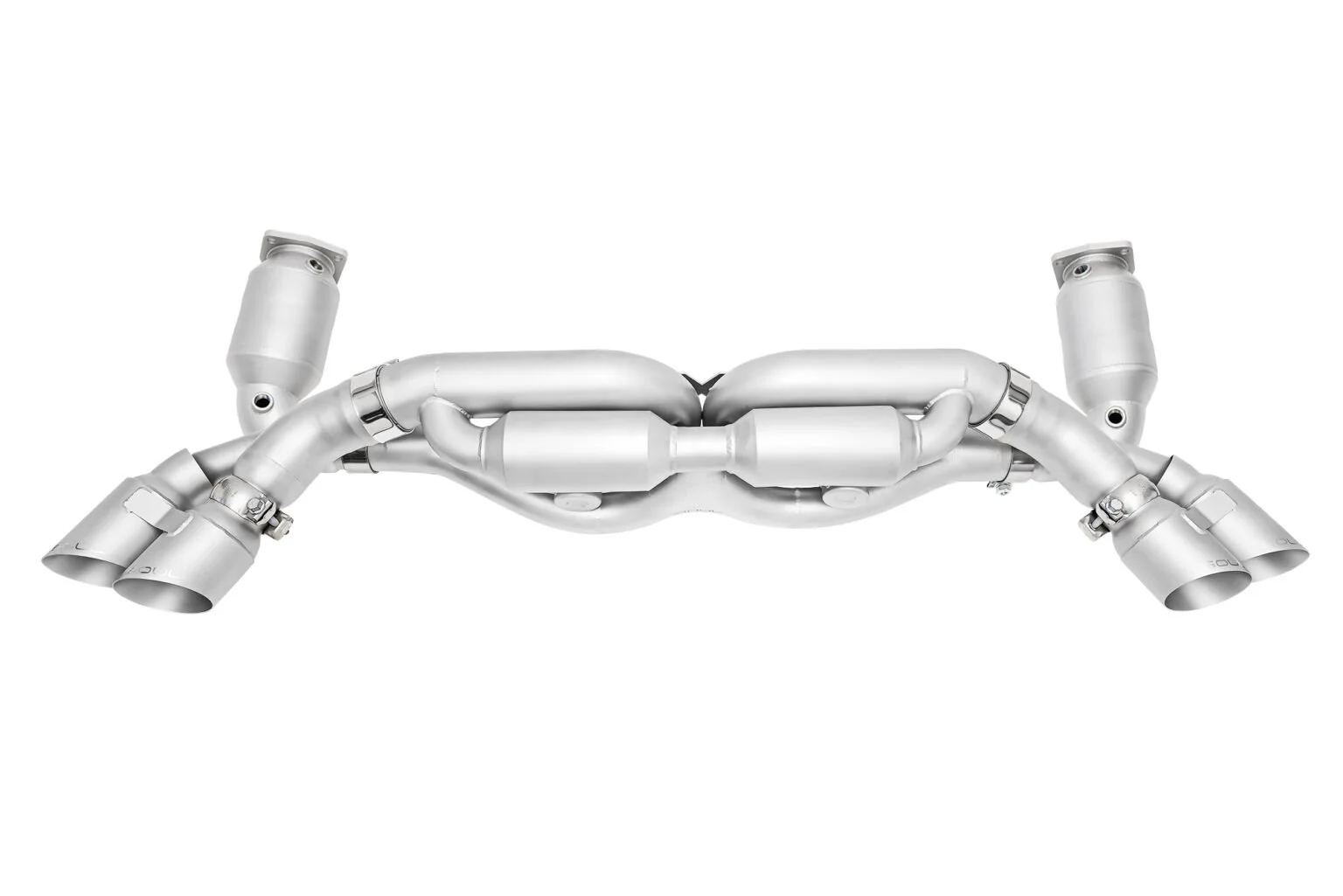 Image 5 of 14
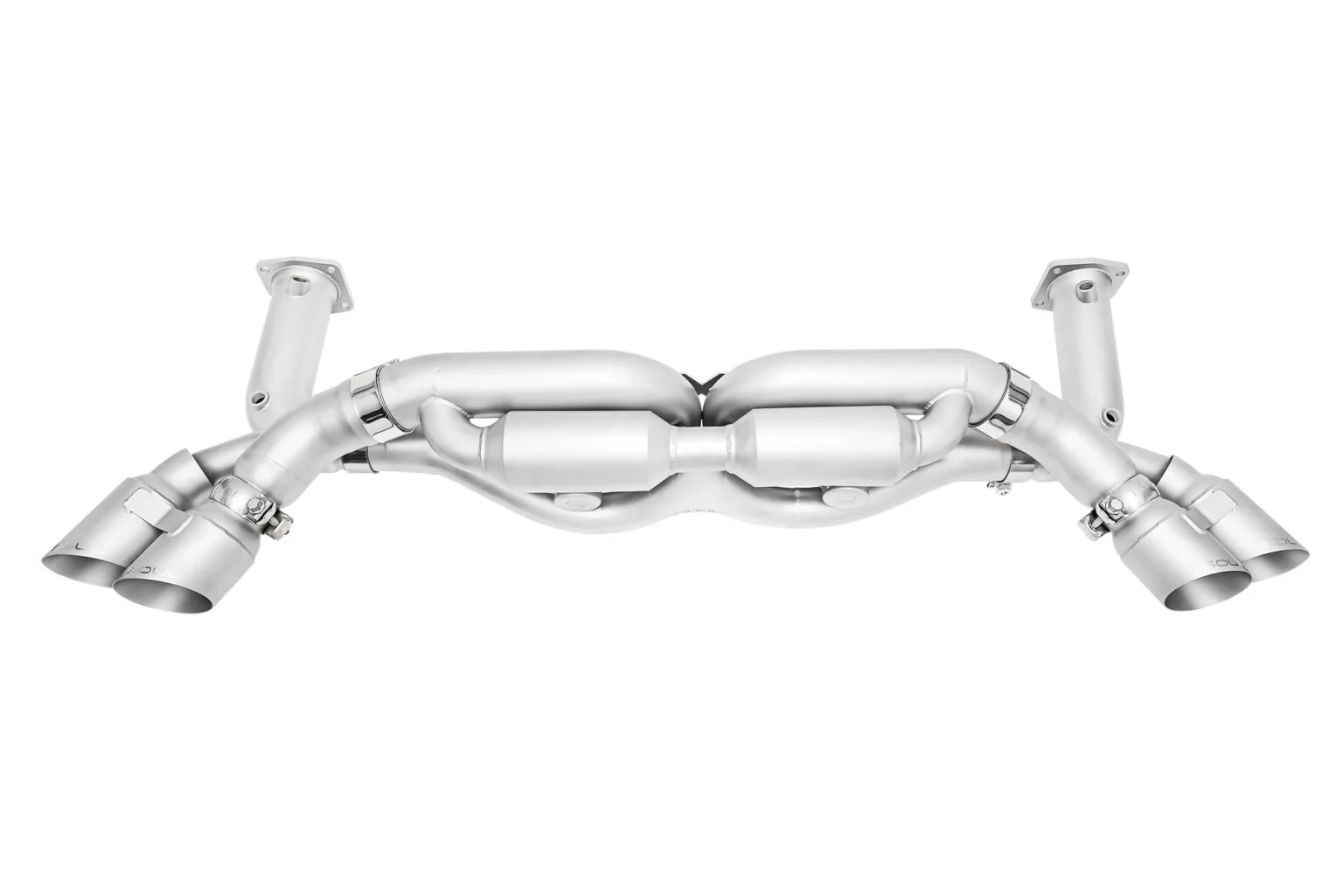 Image 6 of 14
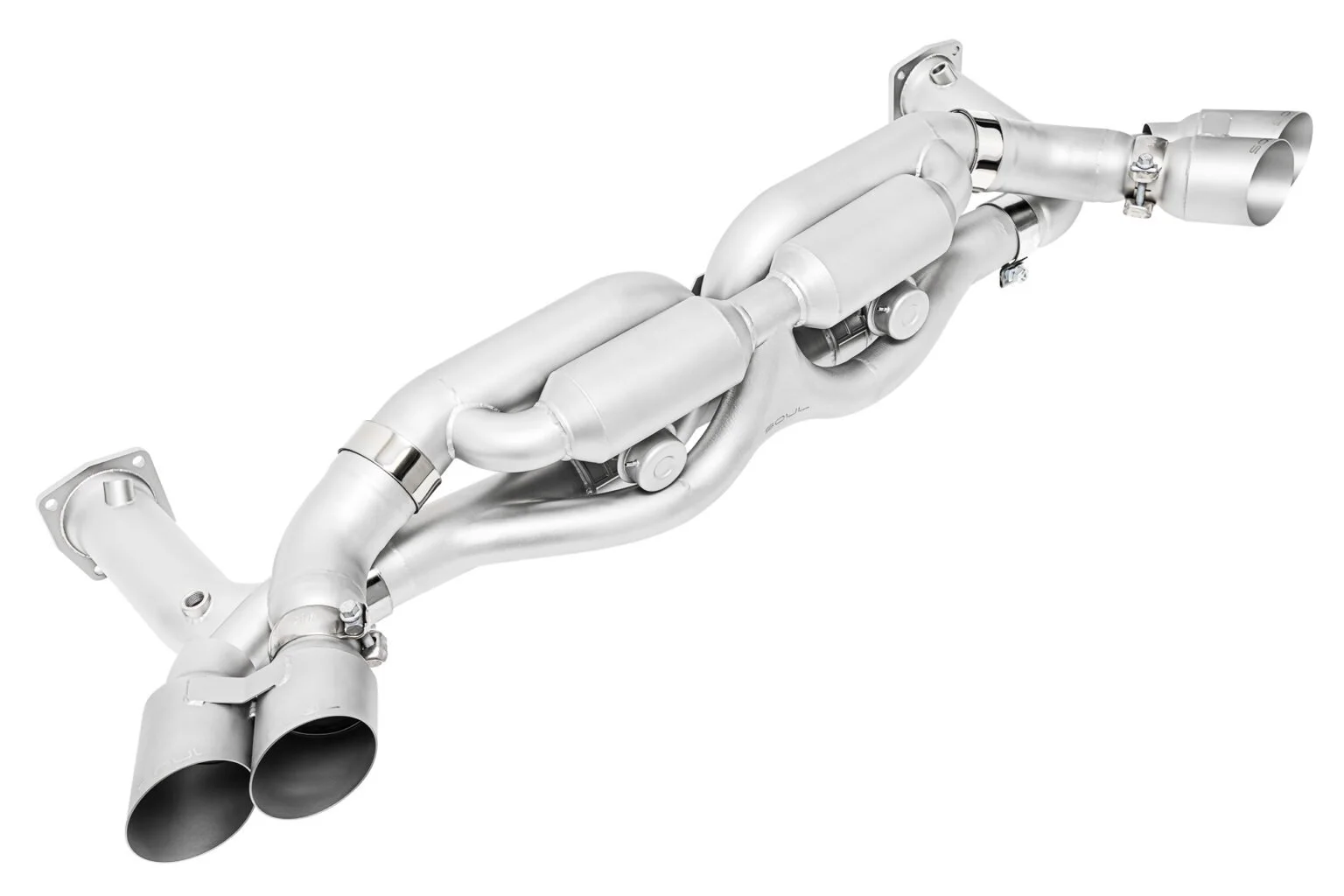 Image 7 of 14
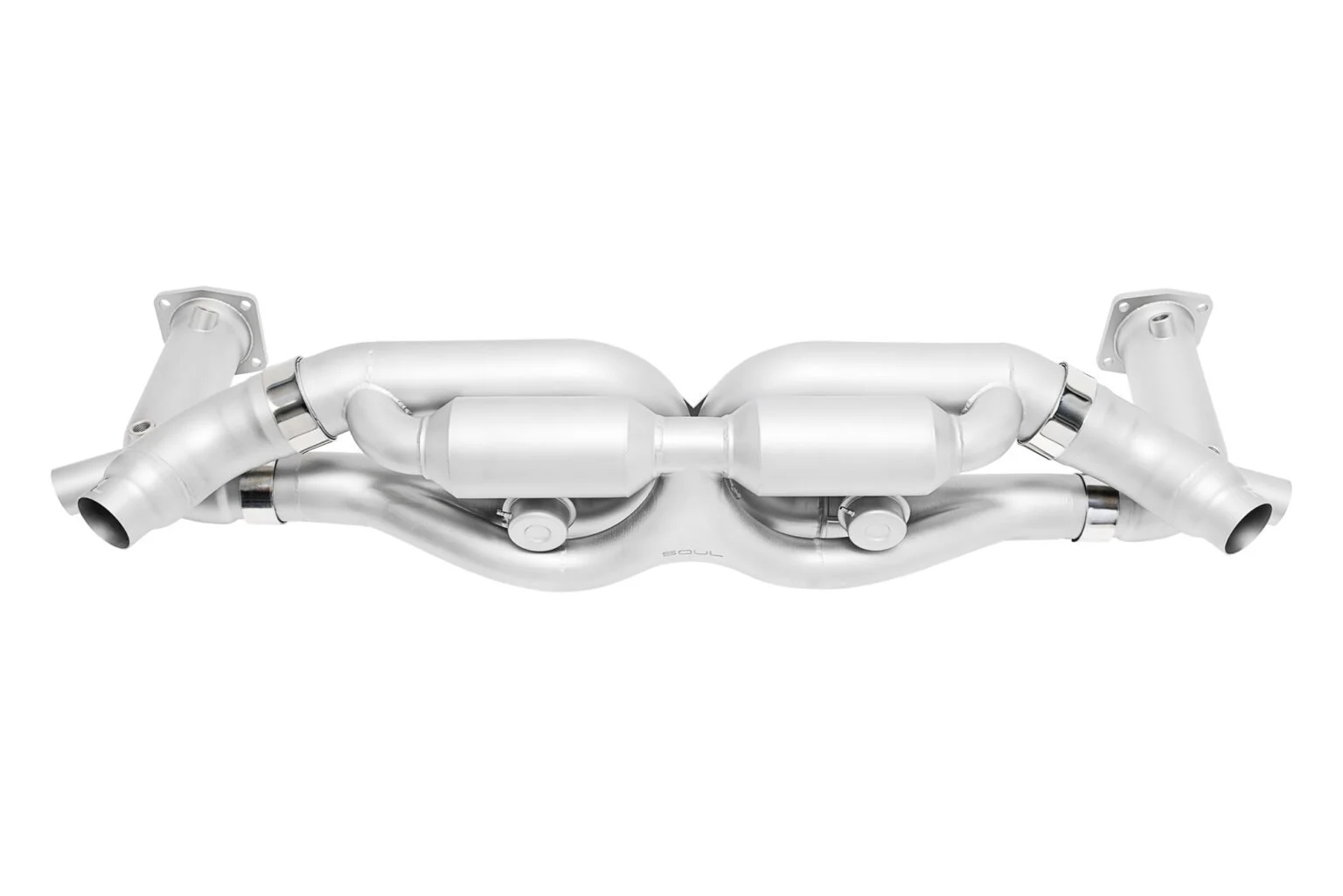 Image 8 of 14
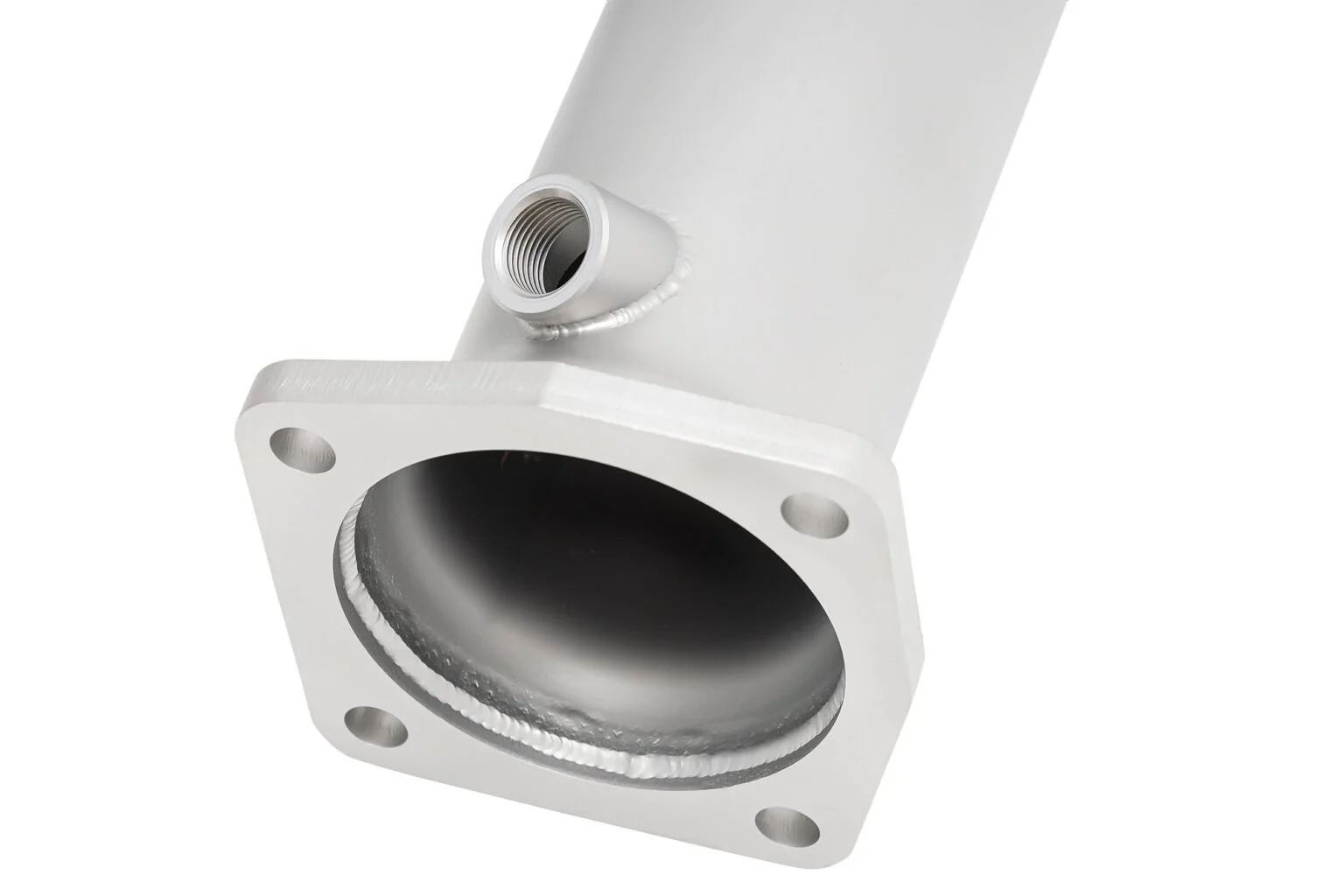 Image 9 of 14
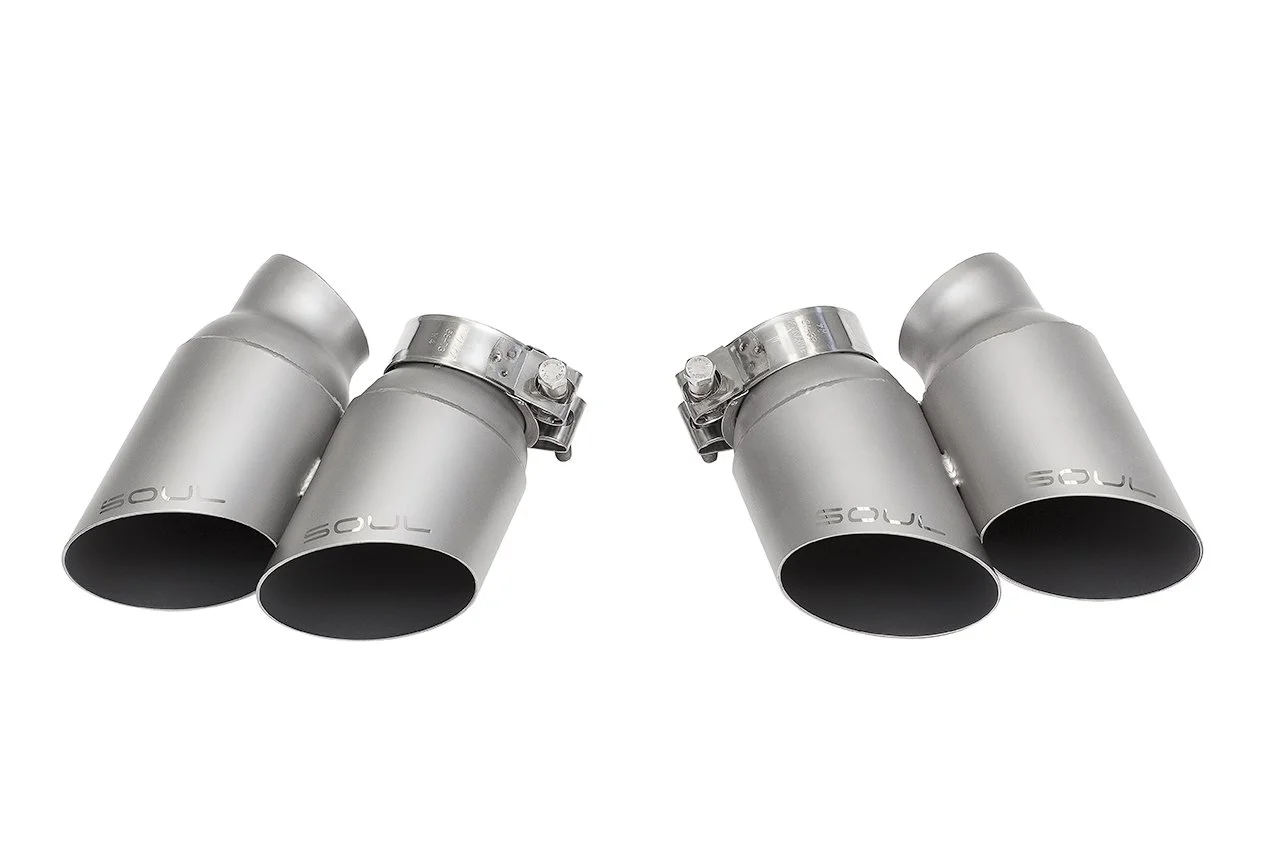 Image 10 of 14
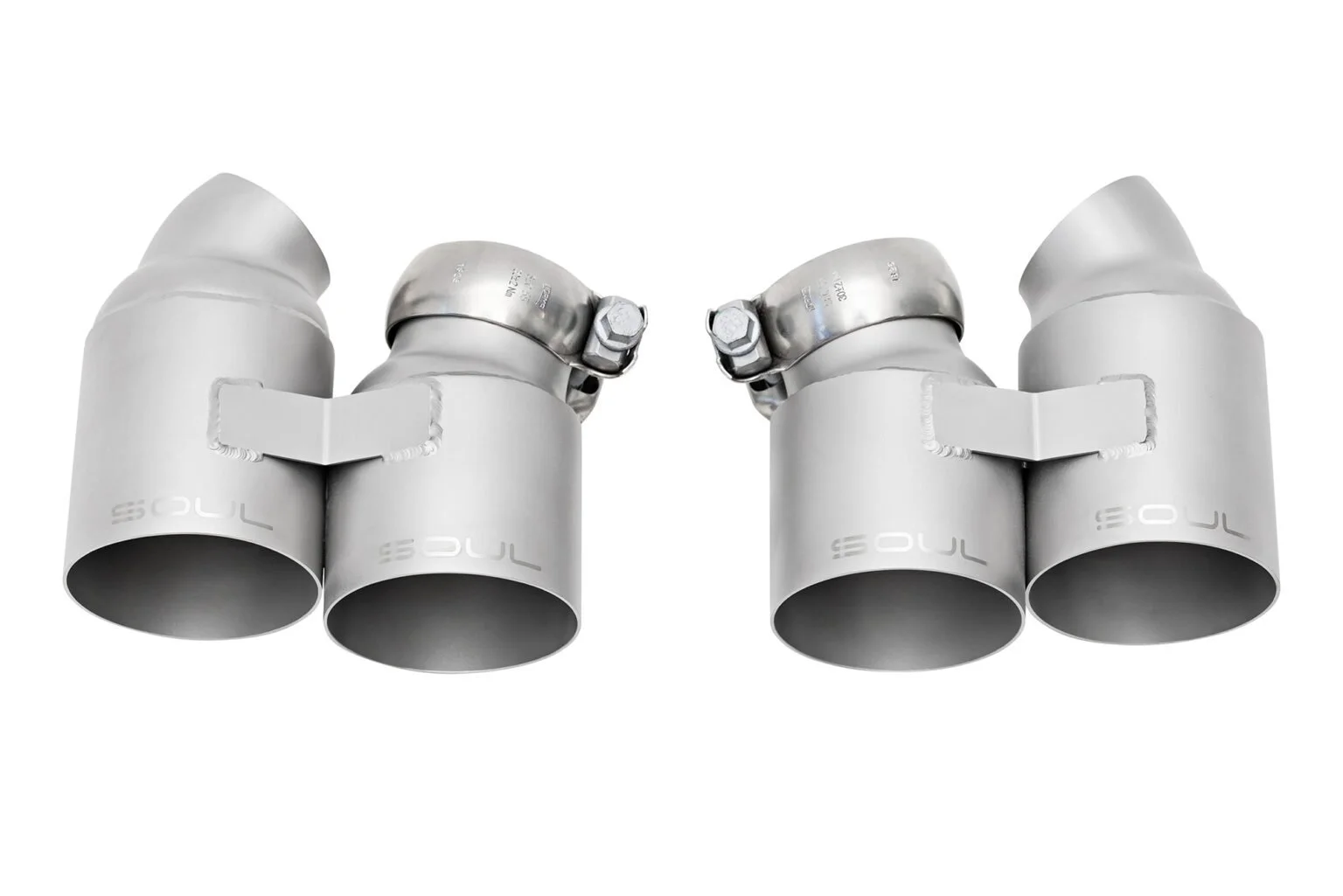 Image 11 of 14
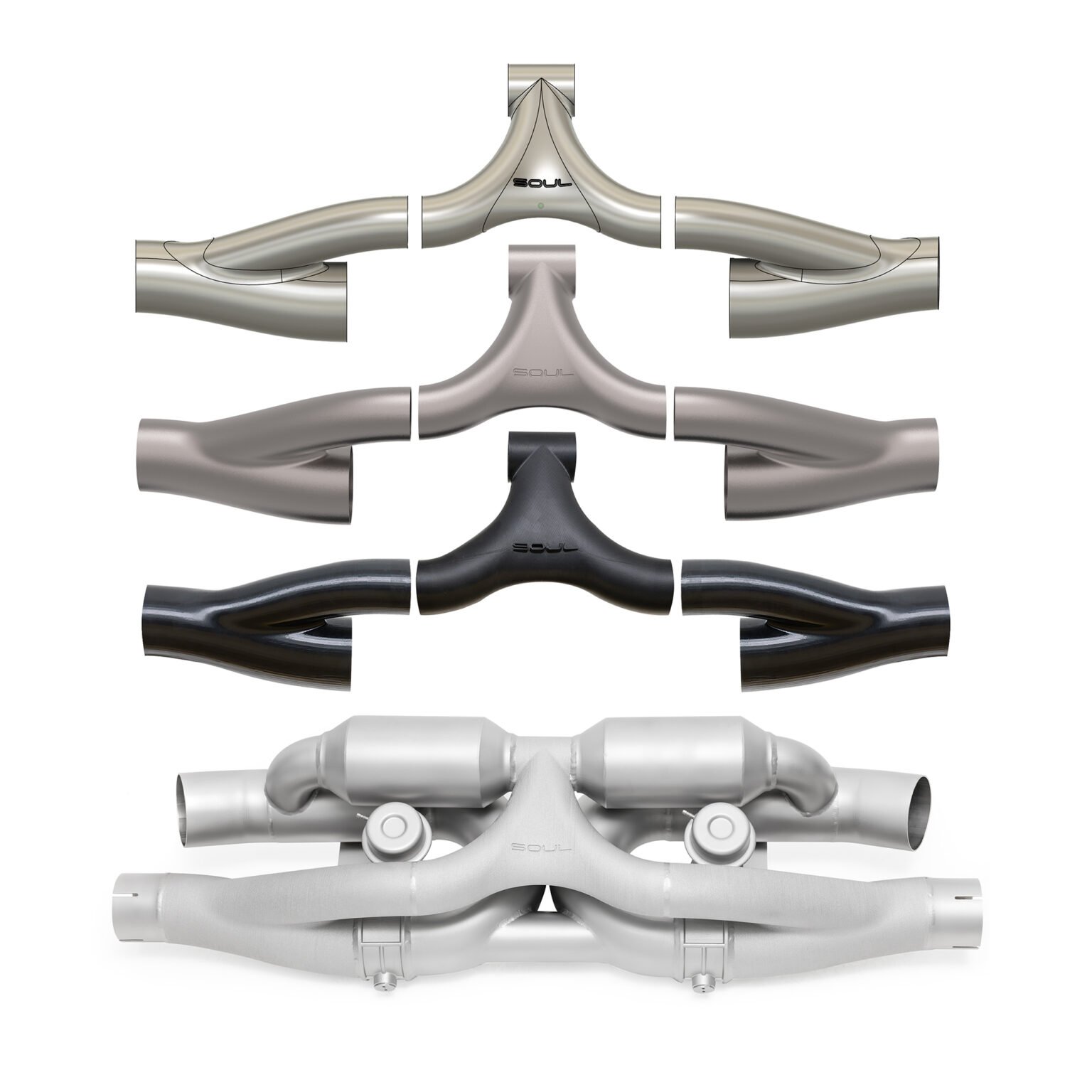 Image 12 of 14
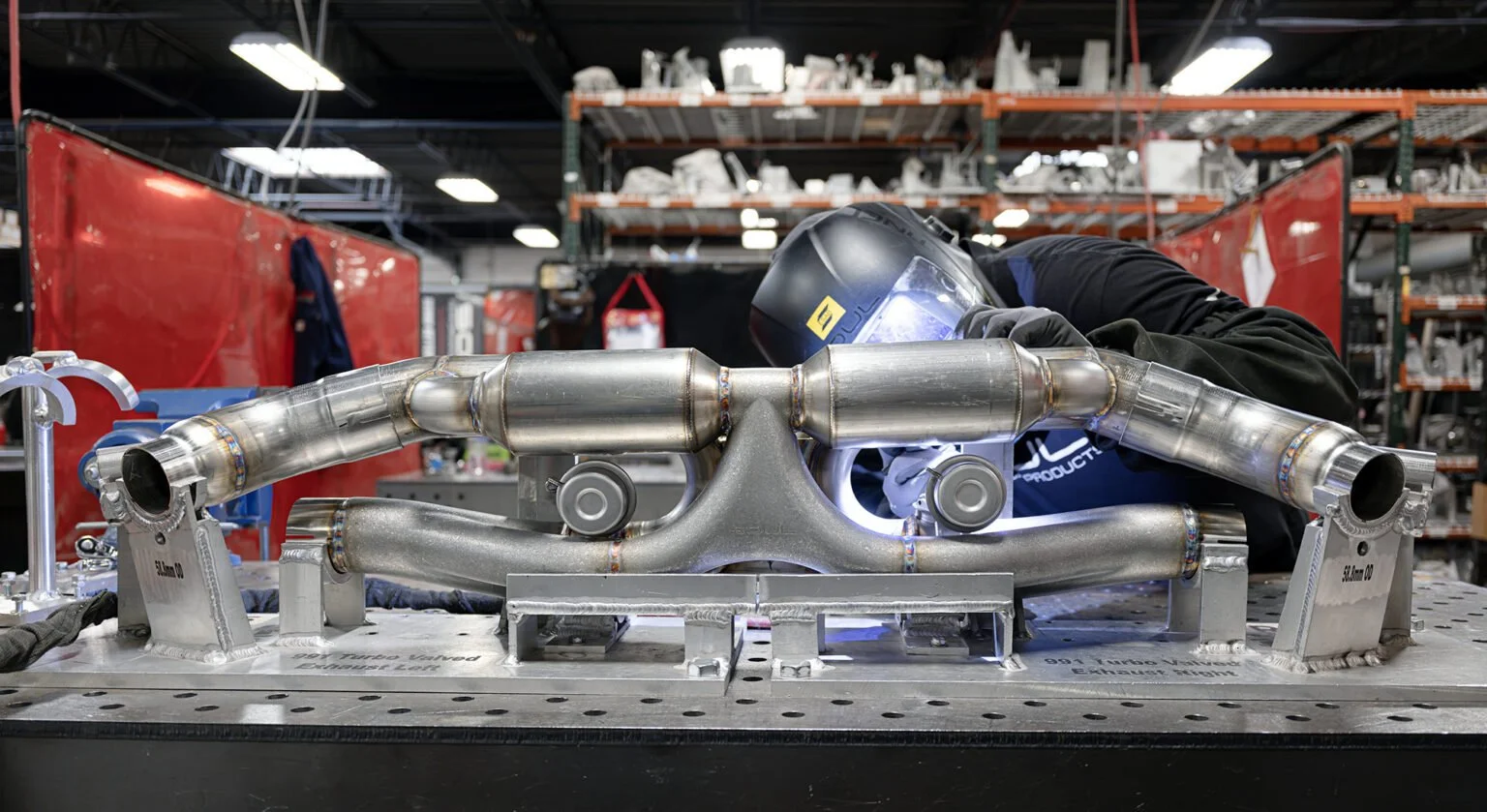 Image 13 of 14
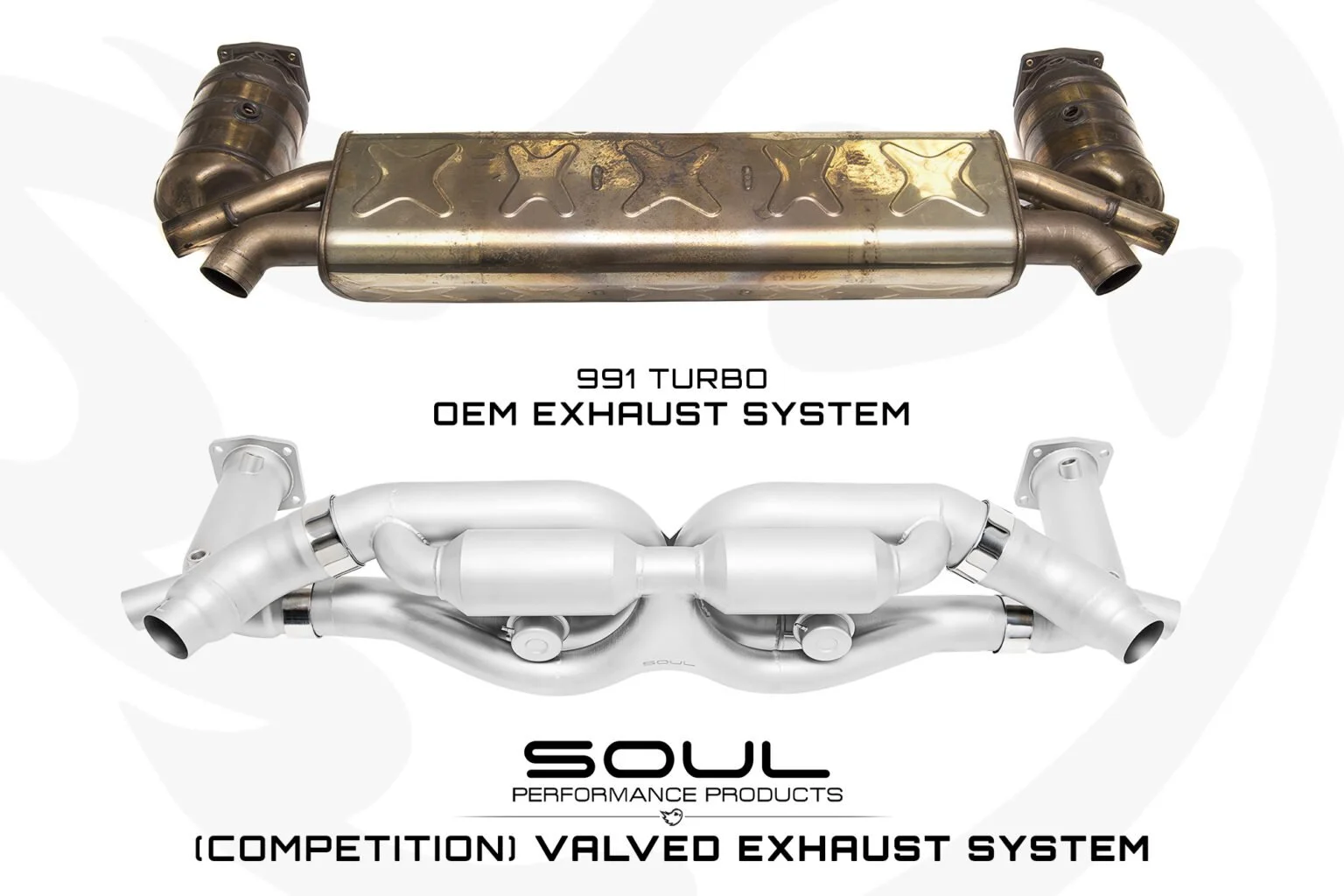 Image 14 of 14
Porsche 991.1 / 991.2 Turbo / Turbo S SOUL Valved Exhaust System
Product Description
The SOUL Valved Exhaust System transforms the 2013–2019 Porsche 991.1 and 991.2 911 Turbo / Turbo S from one of Porsche's most subdued performance cars into a true dual-personality exhaust system.
Unlike the factory 991 Turbo exhaust, which is non-valved, SOUL uses a purpose-built dual-path architecture with a full 3-inch primary flow path for maximum sound and performance and a resonated 2-inch secondary flow path for quieter cruising.
With the valves open, exhaust is routed through the larger 3-inch primary path for an aggressive, refined flat-six tone with substantially increased turbocharger presence. Close the valves and exhaust is redirected through the smaller secondary path and oversized resonators, dramatically reducing volume, smoothing exhaust pulses, and suppressing unwanted cabin drone.
Because the factory 991 Turbo does not provide PSE-style exhaust valve controls, SOUL includes an independent Valve Controller Kit. Valve operation can be controlled using the supplied remotes or programmed to compatible HomeLink buttons inside the vehicle.
The system can be configured three ways upstream: retain the factory catalytic converters, add SOUL Competition Cat Bypass Pipes, or add SOUL Sport Catalytic Converters. Customers may also retain the factory tips on most vehicles or select SOUL's T316L stainless-steel Straight Cut or GT2 Style tips.
FITMENT:
Fits Porsche 991.1 911 Turbo
Fits Porsche 991.1 911 Turbo S
Fits Porsche 991.2 911 Turbo
Fits Porsche 991.2 911 Turbo S
SOUL specifies fitment across 2013–2019 991 Turbo models
Fits Coupe and Cabriolet applications where offered
Compatible with factory catalytic converters
Compatible with SOUL Competition Cat Bypass Pipes
Compatible with SOUL Sport Catalytic Converters
Factory tips may be reused on most applications
Factory tips cannot be reused on the 991.2 Turbo S Exclusive Series
Turbo S Exclusive Series vehicles must select compatible SOUL exhaust tips
DETAILS:
True dual-path valved exhaust system
Specifically developed for the 991 Turbo / Turbo S
Adds active exhaust-volume control to a platform that was factory-equipped with a non-valved exhaust
3-inch primary flow path
2-inch resonated secondary flow path
Valves-open path prioritizes sound and performance
Valves-closed path prioritizes refinement and reduced cabin presence
Oversized resonators in the secondary flow path
Resonators suppress sound level, drone, and exhaust pulses
Tuned-length primary flow path
Balance pipe blends the primary exhaust streams
Increased turbocharger sound
Increased flat-six exhaust character
Substantial difference between valves-open and valves-closed operation
More refined alternative to a GT2 RS-style direct dump-pipe configuration
Included independent valve-control system
Valve control via supplied remotes
Compatible with programming to vehicle HomeLink buttons
Available with factory catalytic converters
Available with Competition Cat Bypass Pipes
Available with Sport Catalytic Converters
Optional T316L stainless-steel exhaust tips
Factory tips can be reused where compatible
Main exhaust constructed from .065-inch-wall T304L stainless steel
Mandrel-bent tubing
Fixture-tested before shipment
Required installation hardware included
Direct bolt-on installation
Backed by SOUL Performance Products' Lifetime Warranty for street and track use
A TRUE VALVED EXHAUST FOR THE 991 TURBO
The factory 991 Turbo exhaust system is notably different from many Porsche Carrera PSE systems.
The 991 Turbo did not leave the factory with an active exhaust-valve system controlled by a PSE button.
SOUL therefore had to develop an entirely new exhaust-control architecture rather than simply reusing Porsche's existing valve commands.
The system provides two genuinely different exhaust paths:
Valves Open:
Full 3-inch primary flow path
Valves Closed:
Resonated 2-inch secondary flow path
The result is substantially greater control over the vehicle's sound character than a conventional fixed exhaust.
VALVES OPEN
Opening the exhaust valves directs gases through the system's larger:
3-inch primary flow path
This mode is designed to maximize:
Exhaust-flow capacity
Turbocharger sound
Flat-six character
Exterior volume
Performance potential
Throttle-related acoustic feedback
SOUL describes the result as aggressive while still maintaining a more refined character than a simple direct-dump arrangement.
Expect significantly greater:
Turbo spool
Turbine whistle
Acceleration sound
High-RPM presence
Shift-related exhaust events
Deceleration character
VALVES CLOSED
Closing the valves redirects exhaust into the:
2-inch secondary flow path
before routing gases through oversized resonators.
The quieter path was specifically developed to reduce:
Exterior volume
Low-RPM cabin presence
Exhaust drone
Unwanted exhaust pulses
Long-distance cruising fatigue
SOUL designed this mode for situations such as:
Highway driving
Early-morning starts
Residential areas
Long-distance touring
Low-profile street driving
Track facilities with strict sound limits
Despite the reduced sound level, SOUL states that the secondary path still offers improved flow compared with the factory muffler.
OVERSIZED SECONDARY RESONATORS
Packaging a useful quiet path inside the rear of a 991 Turbo presents a significant engineering challenge.
Simply reducing the diameter of the secondary tubing was not enough to achieve the sound reduction SOUL wanted.
SOUL therefore routes the smaller secondary piping into oversized resonators.
These resonators work to:
Suppress overall sound level
Smooth exhaust pulses
Reduce undesirable frequencies
Minimize cabin drone
Provide a noticeably quieter valves-closed mode
This allows the car to remain civilized without forcing both exhaust modes through the same muffling architecture.
TUNED-LENGTH PRIMARY FLOW PATH
SOUL originally experimented with its more traditional blended X-pipe concept.
However, when combined with the secondary flow path, SOUL found that the X-pipe configuration did not create enough difference in volume between open and closed modes.
The production Valved Exhaust therefore uses a:
Tuned-length primary flow path with a balance pipe
This provides a stronger acoustic distinction between the two valve positions.
BALANCE PIPE
The primary exhaust streams are connected through a balance pipe rather than SOUL's conventional full X-pipe mixing chamber.
This architecture was selected specifically for the Valved Exhaust after multiple prototypes.
It helps produce:
A more noticeable valves-open sound
Smoother exhaust character
Better integration between the two cylinder-bank exhaust streams
Greater distinction between open and closed modes
MORE REFINED THAN GT2 RS-STYLE DUMP PIPES
A GT2 RS-style exhaust concept routes gases from the catalyst area almost directly toward the rear bumper.
That can produce tremendous volume but also allows considerably more:
Turbocharger mechanical sound
Valve-operation noise
Raw exhaust texture
Abrupt acoustic behavior
SOUL specifically developed the Valved Exhaust to provide a more refined alternative.
The system still becomes aggressive with the valves open, but without relying on an extremely short direct-dump architecture.
INDEPENDENT VALVE CONTROLLER
Because the factory 991 Turbo exhaust is non-valved, the vehicle does not have the vacuum-control system or factory electronic exhaust-valve infrastructure necessary to operate an aftermarket valved system by itself.
SOUL therefore includes an independent Valve Controller Kit.
This provides direct driver control over valve position.
The exhaust does not rely on Porsche's factory PSE button because the 991 Turbo did not use that system.
REMOTE CONTROL
The included controller provides remote valve operation.
The driver can select between:
Quiet / Valves Closed
and
Aggressive / Valves Open
without changing the underlying vehicle exhaust hardware.
HOMELINK INTEGRATION
SOUL's controller can also be programmed to compatible HomeLink buttons inside the vehicle.
This provides an integrated solution without requiring the driver to keep the supplied remote immediately accessible.
HomeLink can therefore be used to command the exhaust valves from the factory interior controls.
THREE CATALYST CONFIGURATIONS
The Valved Exhaust can be configured with:
Reuse OEM Catalytic Converters
SOUL Competition Cat Bypass Pipes
or
SOUL Sport Catalytic Converters
This makes the system unusually flexible because the same basic valved rear exhaust can serve everything from a relatively mild street car to a highly modified competition-focused Turbo.
REUSE OEM CATALYTIC CONVERTERS
The least expensive and most conservative configuration retains Porsche's original catalyst assemblies.
This configuration provides:
Full valved-exhaust functionality
3-inch valves-open path
Resonated valves-closed path
Increased exhaust character
Increased turbocharger presence
Retained factory catalysts
Lowest package price
For customers primarily interested in sound control and exhaust character, this is the logical starting point.
COMPETITION CAT BYPASS CONFIGURATION
The Competition configuration adds SOUL Cat Bypass Pipes and removes the factory catalytic converters.
Benefits include:
Reduced post-turbo restriction
Greater turbocharger sound
Greater exhaust volume
Increased flow capacity
Reduced catalyst-section weight
Greater tuning potential
Because the catalytic converters are removed, this configuration introduces additional emissions and diagnostic considerations.
It is intended for competition / off-road applications where catalyst retention is not required.
SPORT CATALYTIC CONVERTER CONFIGURATION
The Sport configuration replaces the factory catalysts with SOUL's high-flow Sport Catalytic Converters.
This provides a middle ground between the OEM-catalyst and completely catless configurations.
Benefits include:
Increased catalyst-section flow
Increased turbocharger sound
Improved throttle response
Greater performance potential
Retained catalytic converters
More street-oriented operation than the Competition configuration
This is the most comprehensive catted version of the SOUL Valved Exhaust System.
CURRENT SOUL HIGH-FLOW CATALYST DESIGN
Current product data for the Sport Cat configuration identifies a SOUL-designed 300-cell catalyst with a custom-specified precious-metal coating and triple-metal matrix core.
The Sport Cat option should therefore be treated separately from older 991 Turbo exhaust descriptions that referenced earlier catalyst specifications.
3D-PRINTED 316L COMPONENTS
Current product information for the Valved Exhaust also identifies the use of metal 3D-printed 316L stainless-steel sections where the geometry benefits from additive manufacturing.
These complex components allow SOUL to create optimized internal flow paths that would be difficult to reproduce using conventional cut-and-weld fabrication alone.
.065-INCH T304L STAINLESS CONSTRUCTION
The primary fabricated exhaust components use:
.065-inch-wall T304L stainless steel
This provides:
High-temperature durability
Corrosion resistance
Structural strength
Consistent fabrication
Long service life
Suitability for repeated street and track heat cycling
BACK-PURGED TIG WELDING
Current SOUL fabrication specifications use back-purged TIG welding to promote proper weld penetration and minimize oxidation inside the tubing.
This contributes to:
Strong weld joints
Cleaner internal surfaces
Improved durability
Consistent exhaust-flow paths
EXHAUST TIP OPTIONS
Three tip configurations are available:
Reuse OEM Tips
Signature Satin GT2 Style Single Wall
Signature Satin Straight Cut Single Wall
SOUL's current optional tips are manufactured from T316L stainless steel.
REUSE OEM TIPS
Most standard 991 Turbo and Turbo S vehicles can reuse their original factory exhaust tips.
This provides:
OEM rear appearance
Lowest purchase price
No additional tip cost
The OEM-tip option is available with all three catalyst configurations.
GT2 STYLE SINGLE WALL TIPS
The GT2 Style tips provide a more aggressive motorsport-inspired appearance.
They are manufactured from T316L stainless steel and finished in SOUL's Signature Satin.
STRAIGHT CUT SINGLE WALL TIPS
The Straight Cut tips provide a cleaner and more traditional motorsport-style outlet.
They are also manufactured from T316L stainless steel with SOUL's Signature Satin finish.
TURBO S EXCLUSIVE SERIES
The 991.2 Turbo S Exclusive Series cannot reuse its factory exhaust tips with the SOUL Valved Exhaust System.
Exclusive Series customers must select:
Signature Satin GT2 Style Single Wall
or
Signature Satin Straight Cut Single Wall
Do not fulfill an Exclusive Series order using the OEM-tip configuration.
FACTORY CATS VS. SPORT CATS VS. COMPETITION
Reuse OEM Cats
Starts at $3,995
Retains factory catalysts
Most conservative configuration
Full valved functionality
Lowest cost
Best starting point for sound-focused customers
Competition
Starts at $4,995
Catless
Maximum catalyst-section flow
Maximum turbocharger sound
Greater emissions / CEL considerations
Competition-oriented
Sport Cats
Starts at $6,995
High-flow catalytic converters
Increased flow compared with factory catalysts
Retains catalytic converters
More street-oriented than Competition
Most comprehensive catted configuration
VALVED EXHAUST VS. X-PIPE
SOUL Valved Exhaust
Starts at $3,995
Active sound control
3-inch primary path
Resonated 2-inch secondary path
Included controller
HomeLink compatibility
Available with factory, Sport, or catless Competition catalyst configurations
SOUL X-Pipe
Starts at $2,995
Fixed/non-valved design
3-inch rear exhaust
Quad race resonators
Retains existing catalysts
Simpler and less expensive
The Valved Exhaust is the better solution for customers who place a high value on being able to substantially change the vehicle's sound at the push of a button.
VALVED EXHAUST VS. SPORT X-PIPE
SOUL Valved Exhaust with Sport Cats
Starts at $6,995
High-flow catalytic converters
Active valves
Quiet secondary path
Aggressive primary path
HomeLink control
SOUL Sport X-Pipe
Starts at $6,295
High-flow catalytic converters
Fixed/non-valved architecture
Proprietary X-pipe
Quad race resonators
No driver-selectable quiet mode
Both retain catalysts, but they prioritize different characteristics.
VALVED EXHAUST VS. COMPETITION X-PIPE
SOUL Valved Exhaust with Competition Pipes
Starts at $4,995
Catless
Active sound control
Quiet secondary path available
Aggressive valves-open mode
SOUL Competition X-Pipe
Starts at $3,995
Catless
Fixed/non-valved architecture
Quad race resonators
Lower cost
No active quiet mode
For a catless car that still sees regular street or sound-restricted track use, the Valved Exhaust provides considerably more acoustic flexibility.
PERFORMANCE
SOUL designed the 3-inch primary path and available high-flow catalyst / catless configurations to support increased engine output.
However, the current Valved Exhaust product page does not publish a controlled stock-exhaust versus Valved-Exhaust-only dyno comparison.
DasMotoring therefore does not advertise a specific numerical horsepower or torque increase for the system itself.
WEIGHT
SOUL's current Valved Exhaust product page does not publish a verified system weight or factory-to-SOUL weight comparison.
DasMotoring therefore does not advertise a numerical weight-savings figure for this system.
EMISSIONS NOTE
The emissions characteristics of the system depend on the selected catalyst configuration.
Reuse OEM Cats: retains the factory catalytic converters.
Sport Cats: replaces factory catalyst assemblies with aftermarket high-flow catalysts.
Competition: removes the catalytic converters entirely and is intended for competition / off-road use.
Customers are responsible for determining compliance with applicable federal, state, and local regulations.
Product Description
The SOUL Valved Exhaust System transforms the 2013–2019 Porsche 991.1 and 991.2 911 Turbo / Turbo S from one of Porsche's most subdued performance cars into a true dual-personality exhaust system.
Unlike the factory 991 Turbo exhaust, which is non-valved, SOUL uses a purpose-built dual-path architecture with a full 3-inch primary flow path for maximum sound and performance and a resonated 2-inch secondary flow path for quieter cruising.
With the valves open, exhaust is routed through the larger 3-inch primary path for an aggressive, refined flat-six tone with substantially increased turbocharger presence. Close the valves and exhaust is redirected through the smaller secondary path and oversized resonators, dramatically reducing volume, smoothing exhaust pulses, and suppressing unwanted cabin drone.
Because the factory 991 Turbo does not provide PSE-style exhaust valve controls, SOUL includes an independent Valve Controller Kit. Valve operation can be controlled using the supplied remotes or programmed to compatible HomeLink buttons inside the vehicle.
The system can be configured three ways upstream: retain the factory catalytic converters, add SOUL Competition Cat Bypass Pipes, or add SOUL Sport Catalytic Converters. Customers may also retain the factory tips on most vehicles or select SOUL's T316L stainless-steel Straight Cut or GT2 Style tips.
FITMENT:
Fits Porsche 991.1 911 Turbo
Fits Porsche 991.1 911 Turbo S
Fits Porsche 991.2 911 Turbo
Fits Porsche 991.2 911 Turbo S
SOUL specifies fitment across 2013–2019 991 Turbo models
Fits Coupe and Cabriolet applications where offered
Compatible with factory catalytic converters
Compatible with SOUL Competition Cat Bypass Pipes
Compatible with SOUL Sport Catalytic Converters
Factory tips may be reused on most applications
Factory tips cannot be reused on the 991.2 Turbo S Exclusive Series
Turbo S Exclusive Series vehicles must select compatible SOUL exhaust tips
DETAILS:
True dual-path valved exhaust system
Specifically developed for the 991 Turbo / Turbo S
Adds active exhaust-volume control to a platform that was factory-equipped with a non-valved exhaust
3-inch primary flow path
2-inch resonated secondary flow path
Valves-open path prioritizes sound and performance
Valves-closed path prioritizes refinement and reduced cabin presence
Oversized resonators in the secondary flow path
Resonators suppress sound level, drone, and exhaust pulses
Tuned-length primary flow path
Balance pipe blends the primary exhaust streams
Increased turbocharger sound
Increased flat-six exhaust character
Substantial difference between valves-open and valves-closed operation
More refined alternative to a GT2 RS-style direct dump-pipe configuration
Included independent valve-control system
Valve control via supplied remotes
Compatible with programming to vehicle HomeLink buttons
Available with factory catalytic converters
Available with Competition Cat Bypass Pipes
Available with Sport Catalytic Converters
Optional T316L stainless-steel exhaust tips
Factory tips can be reused where compatible
Main exhaust constructed from .065-inch-wall T304L stainless steel
Mandrel-bent tubing
Fixture-tested before shipment
Required installation hardware included
Direct bolt-on installation
Backed by SOUL Performance Products' Lifetime Warranty for street and track use
A TRUE VALVED EXHAUST FOR THE 991 TURBO
The factory 991 Turbo exhaust system is notably different from many Porsche Carrera PSE systems.
The 991 Turbo did not leave the factory with an active exhaust-valve system controlled by a PSE button.
SOUL therefore had to develop an entirely new exhaust-control architecture rather than simply reusing Porsche's existing valve commands.
The system provides two genuinely different exhaust paths:
Valves Open:
Full 3-inch primary flow path
Valves Closed:
Resonated 2-inch secondary flow path
The result is substantially greater control over the vehicle's sound character than a conventional fixed exhaust.
VALVES OPEN
Opening the exhaust valves directs gases through the system's larger:
3-inch primary flow path
This mode is designed to maximize:
Exhaust-flow capacity
Turbocharger sound
Flat-six character
Exterior volume
Performance potential
Throttle-related acoustic feedback
SOUL describes the result as aggressive while still maintaining a more refined character than a simple direct-dump arrangement.
Expect significantly greater:
Turbo spool
Turbine whistle
Acceleration sound
High-RPM presence
Shift-related exhaust events
Deceleration character
VALVES CLOSED
Closing the valves redirects exhaust into the:
2-inch secondary flow path
before routing gases through oversized resonators.
The quieter path was specifically developed to reduce:
Exterior volume
Low-RPM cabin presence
Exhaust drone
Unwanted exhaust pulses
Long-distance cruising fatigue
SOUL designed this mode for situations such as:
Highway driving
Early-morning starts
Residential areas
Long-distance touring
Low-profile street driving
Track facilities with strict sound limits
Despite the reduced sound level, SOUL states that the secondary path still offers improved flow compared with the factory muffler.
OVERSIZED SECONDARY RESONATORS
Packaging a useful quiet path inside the rear of a 991 Turbo presents a significant engineering challenge.
Simply reducing the diameter of the secondary tubing was not enough to achieve the sound reduction SOUL wanted.
SOUL therefore routes the smaller secondary piping into oversized resonators.
These resonators work to:
Suppress overall sound level
Smooth exhaust pulses
Reduce undesirable frequencies
Minimize cabin drone
Provide a noticeably quieter valves-closed mode
This allows the car to remain civilized without forcing both exhaust modes through the same muffling architecture.
TUNED-LENGTH PRIMARY FLOW PATH
SOUL originally experimented with its more traditional blended X-pipe concept.
However, when combined with the secondary flow path, SOUL found that the X-pipe configuration did not create enough difference in volume between open and closed modes.
The production Valved Exhaust therefore uses a:
Tuned-length primary flow path with a balance pipe
This provides a stronger acoustic distinction between the two valve positions.
BALANCE PIPE
The primary exhaust streams are connected through a balance pipe rather than SOUL's conventional full X-pipe mixing chamber.
This architecture was selected specifically for the Valved Exhaust after multiple prototypes.
It helps produce:
A more noticeable valves-open sound
Smoother exhaust character
Better integration between the two cylinder-bank exhaust streams
Greater distinction between open and closed modes
MORE REFINED THAN GT2 RS-STYLE DUMP PIPES
A GT2 RS-style exhaust concept routes gases from the catalyst area almost directly toward the rear bumper.
That can produce tremendous volume but also allows considerably more:
Turbocharger mechanical sound
Valve-operation noise
Raw exhaust texture
Abrupt acoustic behavior
SOUL specifically developed the Valved Exhaust to provide a more refined alternative.
The system still becomes aggressive with the valves open, but without relying on an extremely short direct-dump architecture.
INDEPENDENT VALVE CONTROLLER
Because the factory 991 Turbo exhaust is non-valved, the vehicle does not have the vacuum-control system or factory electronic exhaust-valve infrastructure necessary to operate an aftermarket valved system by itself.
SOUL therefore includes an independent Valve Controller Kit.
This provides direct driver control over valve position.
The exhaust does not rely on Porsche's factory PSE button because the 991 Turbo did not use that system.
REMOTE CONTROL
The included controller provides remote valve operation.
The driver can select between:
Quiet / Valves Closed
and
Aggressive / Valves Open
without changing the underlying vehicle exhaust hardware.
HOMELINK INTEGRATION
SOUL's controller can also be programmed to compatible HomeLink buttons inside the vehicle.
This provides an integrated solution without requiring the driver to keep the supplied remote immediately accessible.
HomeLink can therefore be used to command the exhaust valves from the factory interior controls.
THREE CATALYST CONFIGURATIONS
The Valved Exhaust can be configured with:
Reuse OEM Catalytic Converters
SOUL Competition Cat Bypass Pipes
or
SOUL Sport Catalytic Converters
This makes the system unusually flexible because the same basic valved rear exhaust can serve everything from a relatively mild street car to a highly modified competition-focused Turbo.
REUSE OEM CATALYTIC CONVERTERS
The least expensive and most conservative configuration retains Porsche's original catalyst assemblies.
This configuration provides:
Full valved-exhaust functionality
3-inch valves-open path
Resonated valves-closed path
Increased exhaust character
Increased turbocharger presence
Retained factory catalysts
Lowest package price
For customers primarily interested in sound control and exhaust character, this is the logical starting point.
COMPETITION CAT BYPASS CONFIGURATION
The Competition configuration adds SOUL Cat Bypass Pipes and removes the factory catalytic converters.
Benefits include:
Reduced post-turbo restriction
Greater turbocharger sound
Greater exhaust volume
Increased flow capacity
Reduced catalyst-section weight
Greater tuning potential
Because the catalytic converters are removed, this configuration introduces additional emissions and diagnostic considerations.
It is intended for competition / off-road applications where catalyst retention is not required.
SPORT CATALYTIC CONVERTER CONFIGURATION
The Sport configuration replaces the factory catalysts with SOUL's high-flow Sport Catalytic Converters.
This provides a middle ground between the OEM-catalyst and completely catless configurations.
Benefits include:
Increased catalyst-section flow
Increased turbocharger sound
Improved throttle response
Greater performance potential
Retained catalytic converters
More street-oriented operation than the Competition configuration
This is the most comprehensive catted version of the SOUL Valved Exhaust System.
CURRENT SOUL HIGH-FLOW CATALYST DESIGN
Current product data for the Sport Cat configuration identifies a SOUL-designed 300-cell catalyst with a custom-specified precious-metal coating and triple-metal matrix core.
The Sport Cat option should therefore be treated separately from older 991 Turbo exhaust descriptions that referenced earlier catalyst specifications.
3D-PRINTED 316L COMPONENTS
Current product information for the Valved Exhaust also identifies the use of metal 3D-printed 316L stainless-steel sections where the geometry benefits from additive manufacturing.
These complex components allow SOUL to create optimized internal flow paths that would be difficult to reproduce using conventional cut-and-weld fabrication alone.
.065-INCH T304L STAINLESS CONSTRUCTION
The primary fabricated exhaust components use:
.065-inch-wall T304L stainless steel
This provides:
High-temperature durability
Corrosion resistance
Structural strength
Consistent fabrication
Long service life
Suitability for repeated street and track heat cycling
BACK-PURGED TIG WELDING
Current SOUL fabrication specifications use back-purged TIG welding to promote proper weld penetration and minimize oxidation inside the tubing.
This contributes to:
Strong weld joints
Cleaner internal surfaces
Improved durability
Consistent exhaust-flow paths
EXHAUST TIP OPTIONS
Three tip configurations are available:
Reuse OEM Tips
Signature Satin GT2 Style Single Wall
Signature Satin Straight Cut Single Wall
SOUL's current optional tips are manufactured from T316L stainless steel.
REUSE OEM TIPS
Most standard 991 Turbo and Turbo S vehicles can reuse their original factory exhaust tips.
This provides:
OEM rear appearance
Lowest purchase price
No additional tip cost
The OEM-tip option is available with all three catalyst configurations.
GT2 STYLE SINGLE WALL TIPS
The GT2 Style tips provide a more aggressive motorsport-inspired appearance.
They are manufactured from T316L stainless steel and finished in SOUL's Signature Satin.
STRAIGHT CUT SINGLE WALL TIPS
The Straight Cut tips provide a cleaner and more traditional motorsport-style outlet.
They are also manufactured from T316L stainless steel with SOUL's Signature Satin finish.
TURBO S EXCLUSIVE SERIES
The 991.2 Turbo S Exclusive Series cannot reuse its factory exhaust tips with the SOUL Valved Exhaust System.
Exclusive Series customers must select:
Signature Satin GT2 Style Single Wall
or
Signature Satin Straight Cut Single Wall
Do not fulfill an Exclusive Series order using the OEM-tip configuration.
FACTORY CATS VS. SPORT CATS VS. COMPETITION
Reuse OEM Cats
Starts at $3,995
Retains factory catalysts
Most conservative configuration
Full valved functionality
Lowest cost
Best starting point for sound-focused customers
Competition
Starts at $4,995
Catless
Maximum catalyst-section flow
Maximum turbocharger sound
Greater emissions / CEL considerations
Competition-oriented
Sport Cats
Starts at $6,995
High-flow catalytic converters
Increased flow compared with factory catalysts
Retains catalytic converters
More street-oriented than Competition
Most comprehensive catted configuration
VALVED EXHAUST VS. X-PIPE
SOUL Valved Exhaust
Starts at $3,995
Active sound control
3-inch primary path
Resonated 2-inch secondary path
Included controller
HomeLink compatibility
Available with factory, Sport, or catless Competition catalyst configurations
SOUL X-Pipe
Starts at $2,995
Fixed/non-valved design
3-inch rear exhaust
Quad race resonators
Retains existing catalysts
Simpler and less expensive
The Valved Exhaust is the better solution for customers who place a high value on being able to substantially change the vehicle's sound at the push of a button.
VALVED EXHAUST VS. SPORT X-PIPE
SOUL Valved Exhaust with Sport Cats
Starts at $6,995
High-flow catalytic converters
Active valves
Quiet secondary path
Aggressive primary path
HomeLink control
SOUL Sport X-Pipe
Starts at $6,295
High-flow catalytic converters
Fixed/non-valved architecture
Proprietary X-pipe
Quad race resonators
No driver-selectable quiet mode
Both retain catalysts, but they prioritize different characteristics.
VALVED EXHAUST VS. COMPETITION X-PIPE
SOUL Valved Exhaust with Competition Pipes
Starts at $4,995
Catless
Active sound control
Quiet secondary path available
Aggressive valves-open mode
SOUL Competition X-Pipe
Starts at $3,995
Catless
Fixed/non-valved architecture
Quad race resonators
Lower cost
No active quiet mode
For a catless car that still sees regular street or sound-restricted track use, the Valved Exhaust provides considerably more acoustic flexibility.
PERFORMANCE
SOUL designed the 3-inch primary path and available high-flow catalyst / catless configurations to support increased engine output.
However, the current Valved Exhaust product page does not publish a controlled stock-exhaust versus Valved-Exhaust-only dyno comparison.
DasMotoring therefore does not advertise a specific numerical horsepower or torque increase for the system itself.
WEIGHT
SOUL's current Valved Exhaust product page does not publish a verified system weight or factory-to-SOUL weight comparison.
DasMotoring therefore does not advertise a numerical weight-savings figure for this system.
EMISSIONS NOTE
The emissions characteristics of the system depend on the selected catalyst configuration.
Reuse OEM Cats: retains the factory catalytic converters.
Sport Cats: replaces factory catalyst assemblies with aftermarket high-flow catalysts.
Competition: removes the catalytic converters entirely and is intended for competition / off-road use.
Customers are responsible for determining compliance with applicable federal, state, and local regulations.